The Great Migration: Earth's Greatest Wildlife Spectacle
Every year, as the short rains transform the southern plains of Tanzania’s Serengeti into a vast carpet of fresh green grass, one of nature’s greatest miracles begins. Across these endless open plains, more than 250,000 wildebeest calves are born within just a few weeks. It is one of the largest synchronized births of any mammal on Earth and marks the beginning of the Great Migration.
For a brief moment, the Serengeti is filled with new life. Tiny calves struggle to their feet within minutes of being born. Before long, they are running beside their mothers, learning to keep pace with a herd that never stands still for long. In a landscape filled with danger, standing still simply isn’t an option.
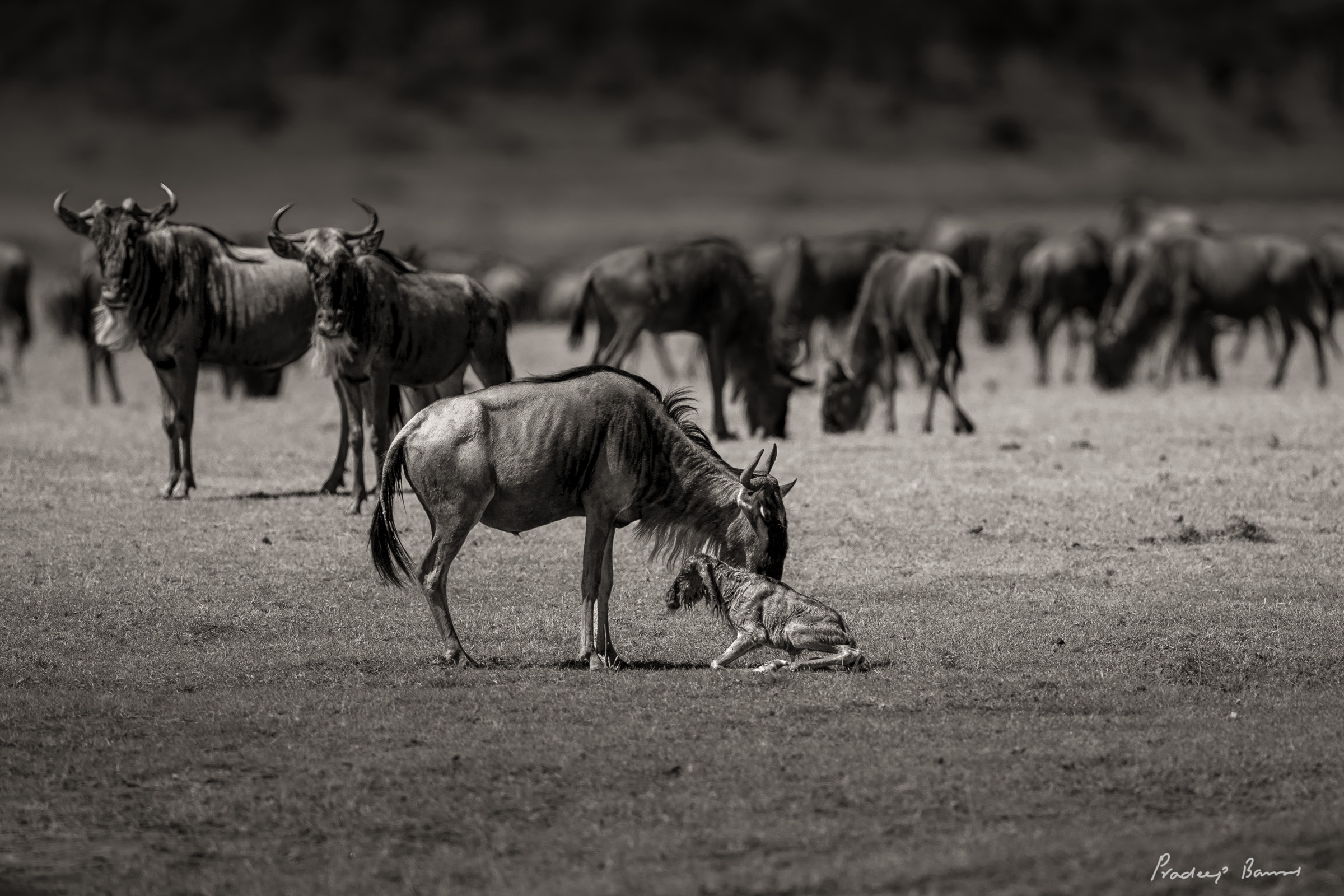
The bond between mother and calf is remarkable. Although they live among hundreds of thousands of other wildebeest, each mother can recognize the unique call and scent of her own calf, and each calf can identify its mother even when surrounded by thousands of nearly identical animals. It is an extraordinary relationship that allows families to remain together despite the overwhelming size of the herd.
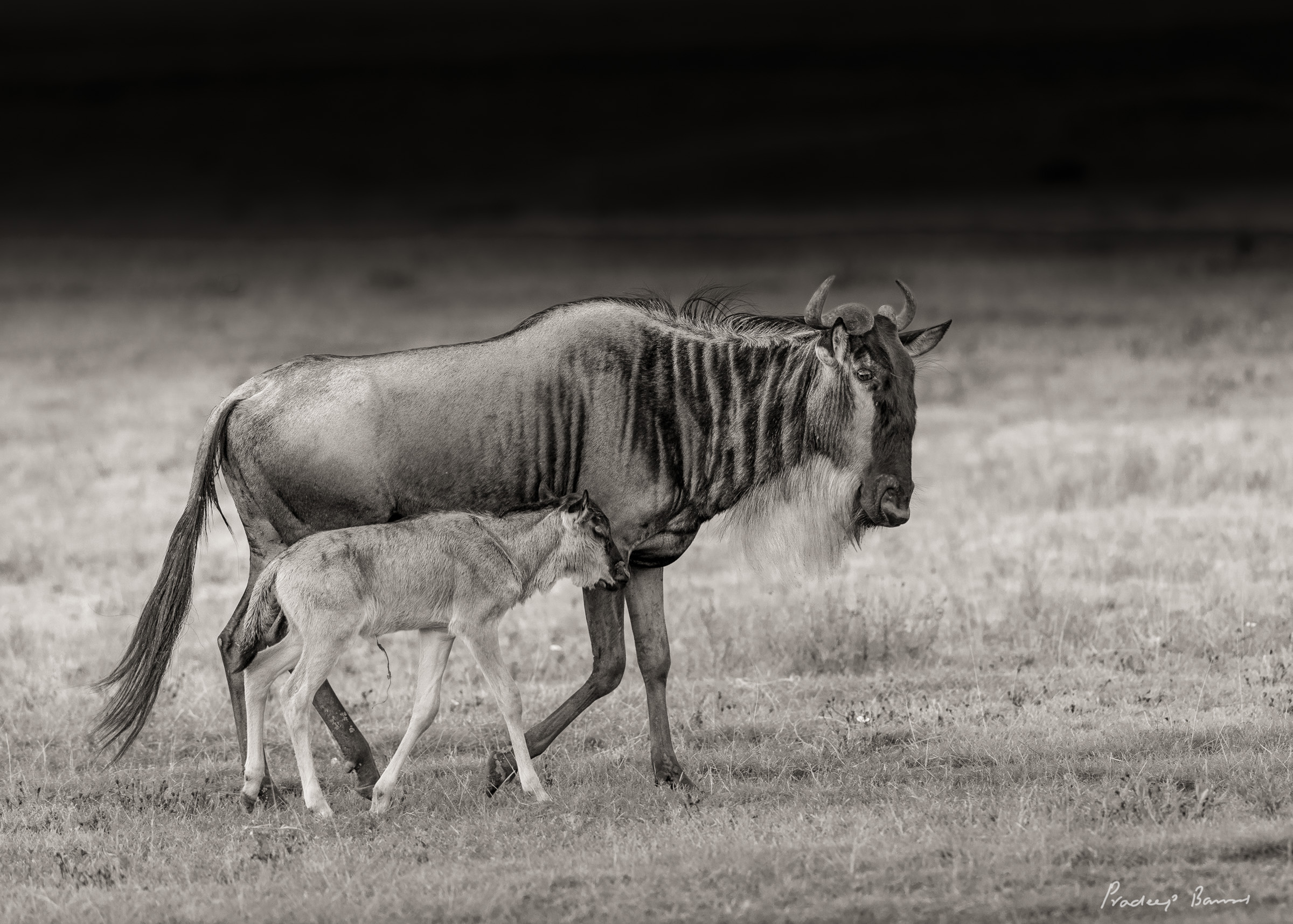
Yet the joy of birth is matched by the harsh reality of survival.
Almost half of these newborn calves will not survive their first year. Lions, leopards, cheetahs and hyenas take many of the young animals before they are fully grown. Others will perish later during the long migration, crossing swollen rivers or simply falling victim to exhaustion and injury. It is nature at its most beautiful and its most unforgiving.
Those that survive will become part of one of the greatest wildlife spectacles our planet has ever known.
A Journey of Giants
The Great Migration is the largest movement of mammals anywhere on Earth.
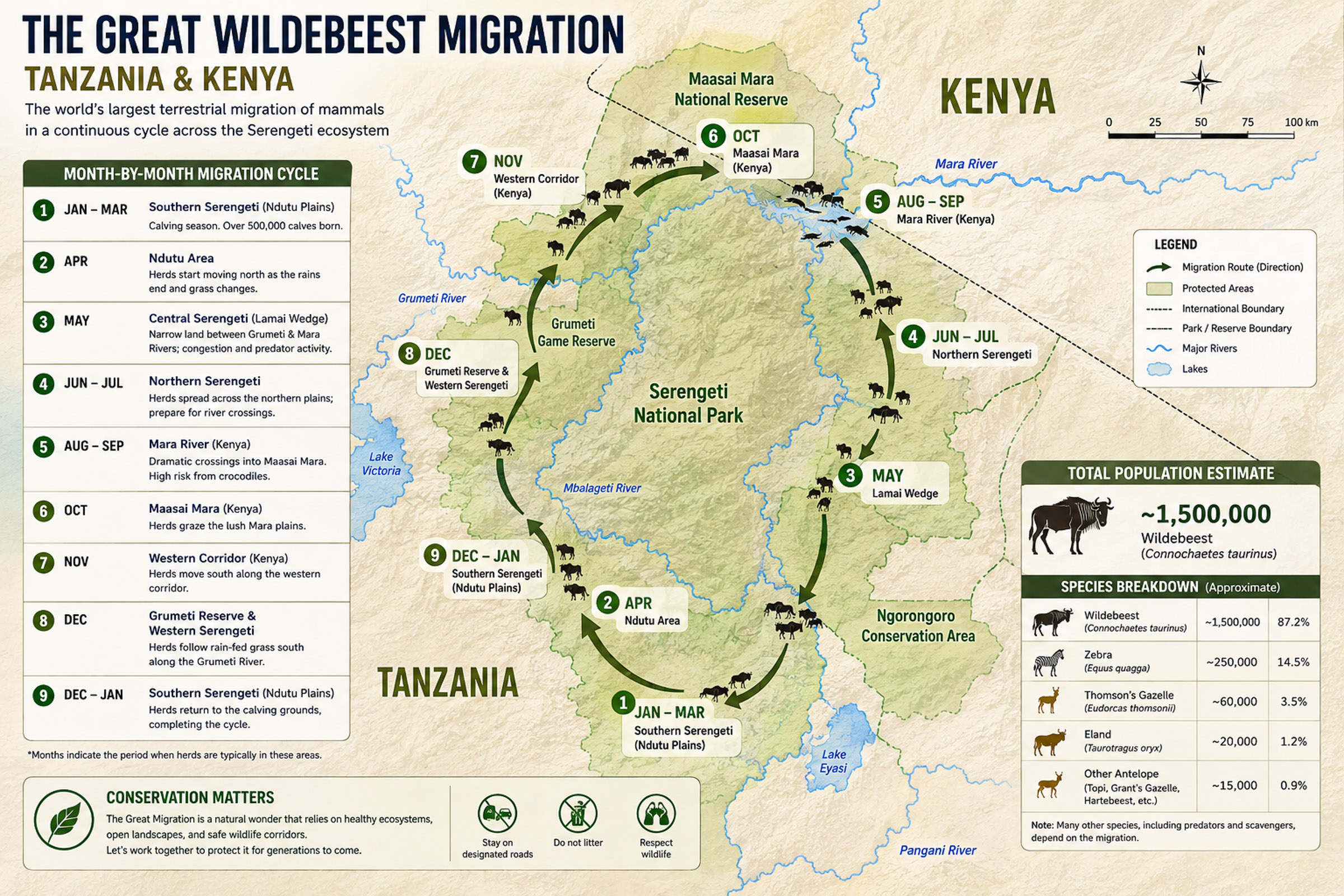
Approximately 1.5 million wildebeest begin an annual journey that covers between 500 and 1,000 miles through Tanzania’s Serengeti National Park and into Kenya’s Maasai Mara before eventually returning south once the rains begin again.
Joining them are around 250,000 zebras and nearly 100,000 gazelles, elands, impalas and other antelope species, creating a moving sea of wildlife unlike anything else on Earth.
From the ground, the sheer number of animals seems impossible to comprehend. Every direction is filled with movement. The air carries the constant sound of hooves, low grunts, and the calls of zebras. Dust hangs over the plains while long columns of animals stretch from one horizon to the other.
For photographers, it is a scene that hardly seems real.
Following the Rain
Unlike birds that migrate using stars or magnetic fields, wildebeest follow something much simpler.
They follow the rain.
The fresh scent of distant rainfall and newly sprouting grass appears to guide the herds across the Serengeti ecosystem. Scientists believe wildebeest can detect changing weather and the smell of fresh vegetation from remarkable distances. As rain falls across another part of the plains, new grass begins to grow within days, and the herds slowly begin moving toward it.

In the Masai Mara: Rainbow after an evening shower as elephants, wildebeests and zebras enjoy the bounty of nature.
Their destination is never fixed.
Instead, they chase an ever-changing wave of green across East Africa.
This instinct has sustained them for thousands of years.
Nature’s Perfect Lawn Mowers
The migration is not simply about finding food.
It is about finding the right food.
Wildebeest are highly specialized grazers that prefer short, young grasses rich in protein and minerals. These tender shoots are easier to digest and provide the nutrients needed by pregnant females, nursing mothers and rapidly growing calves.
Not every herbivore eats the same vegetation.
Zebras are usually the first to arrive. Their strong teeth allow them to crop taller, coarser grasses that many other animals cannot eat.
After the zebras have shortened the grass, wildebeest move in to feed on the fresh new shoots that emerge.
Finally, gazelles and other antelope species browse the smallest and most nutritious plants left behind.
Each species has evolved to feed on a particular type and height of grass, allowing millions of grazing animals to share the same landscape without competing directly for exactly the same food.
It is one of nature’s most efficient systems.
An Evolutionary Memory
One of the most fascinating aspects of the Great Migration is that there is no leader.
No single wildebeest knows the entire route.
Instead, the migration is an example of what scientists call emergent behavior.
Each animal simply responds to its surroundings—the smell of rain, the condition of the grass, the movement of nearby animals and the instinct to stay with the herd. From these simple individual decisions emerges the extraordinary movement of nearly two million animals across East Africa.
It is almost as though the herd carries an evolutionary memory.
Generation after generation has followed the rains. The animals that moved at the right time found food, survived and raised young. Those instincts became deeply embedded over thousands of years, creating a migration that continues almost exactly as it has for countless generations.
No maps.
No leaders.
Only instinct refined by evolution.
Waiting at the River
Eventually the herds reach one of the rivers that stand between them and fresh grazing.
Here the migration slows.
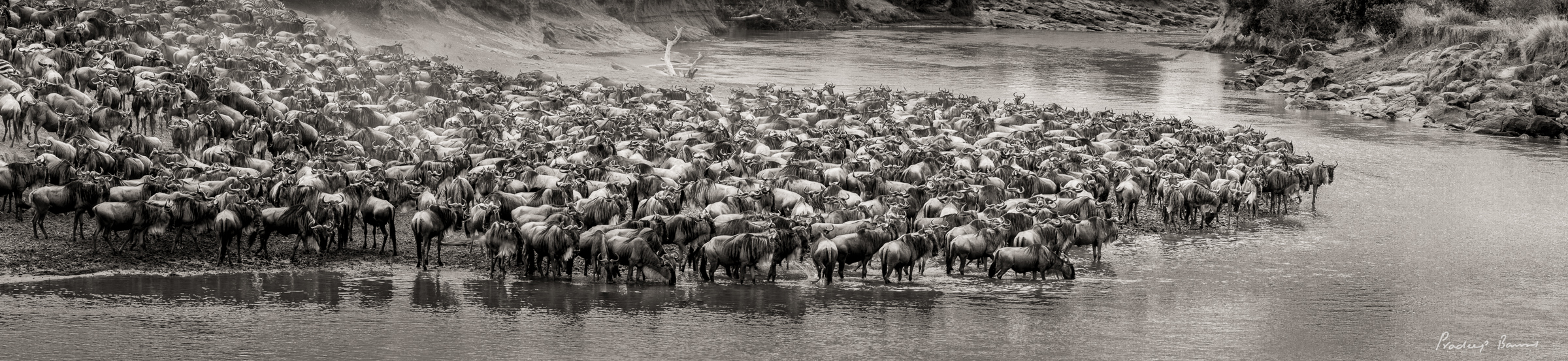
Thousands upon thousands of animals gather along the riverbank.
They wait.
Sometimes they wait for hours.
Sometimes for days. Going back and forth from the river bank back into the plains, only to return again a few minutes, a few hours or a few days later. There is no leader, no plan of action.
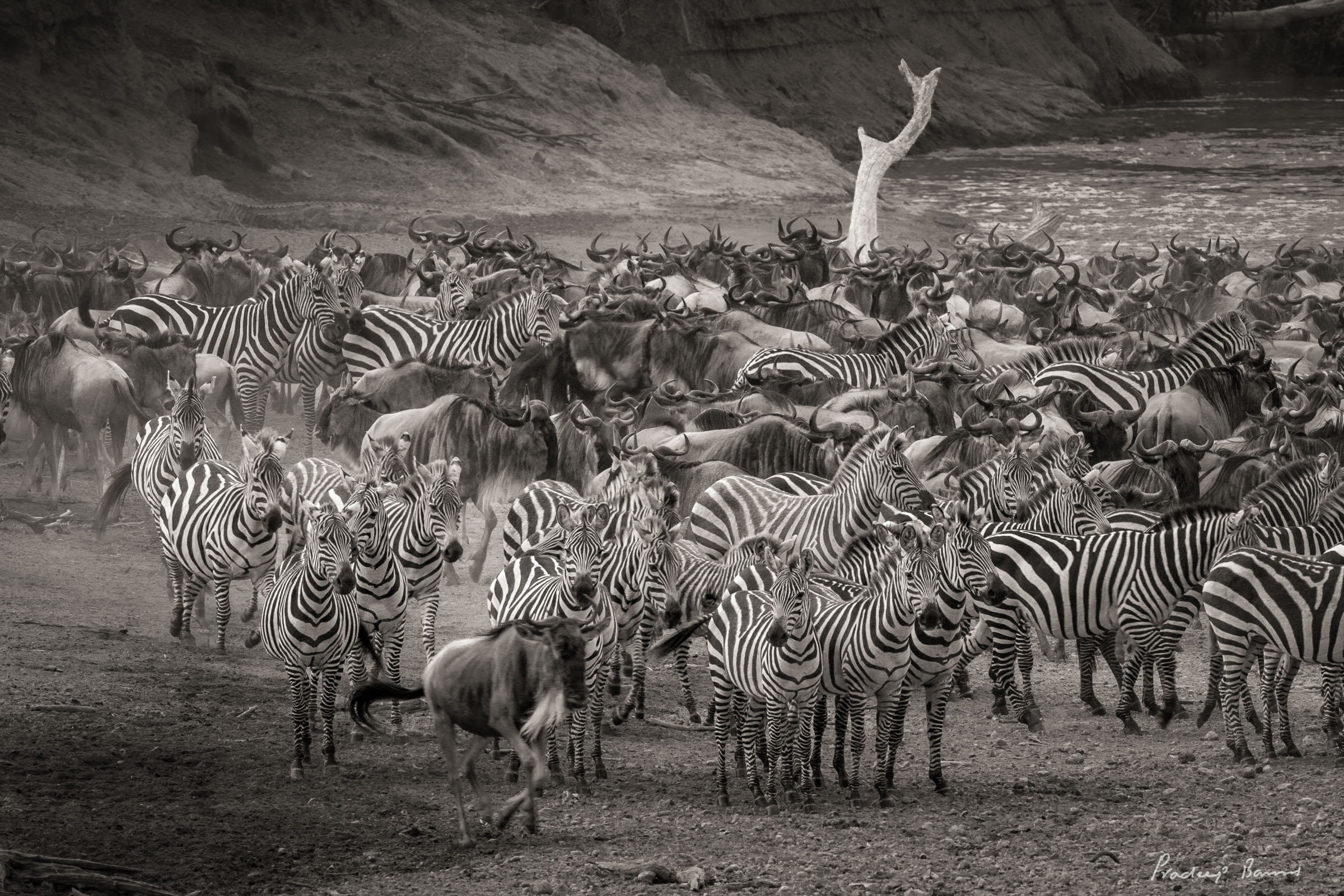
The herd becomes restless. Animals push forward, then retreat. Dust rises into the air. The river below flows quietly, hiding dangers beneath its surface.
Nobody wants to be first.
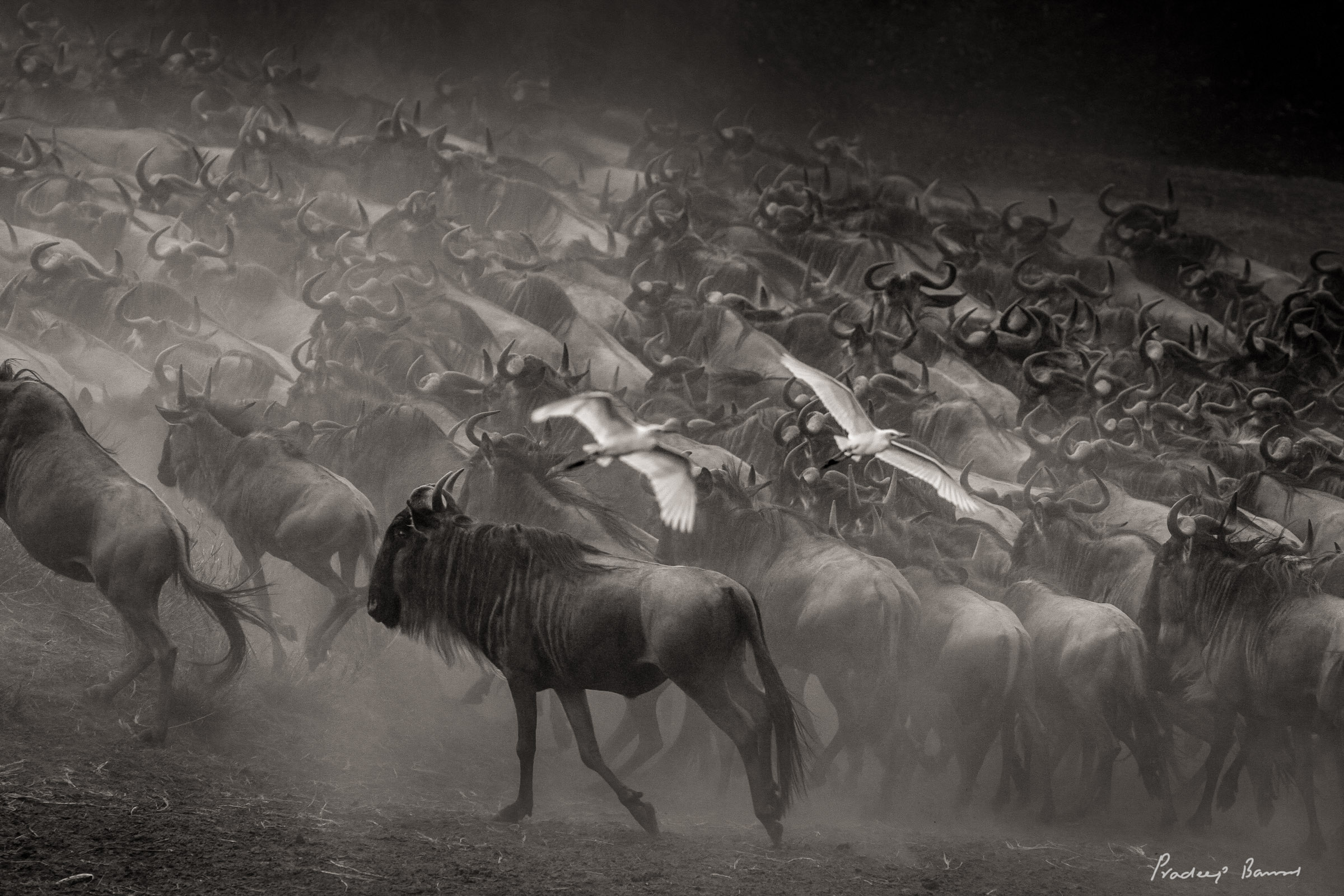
Then, almost without warning, a single wildebeest steps forward.
It edges cautiously toward the water.
One jump changes everything.
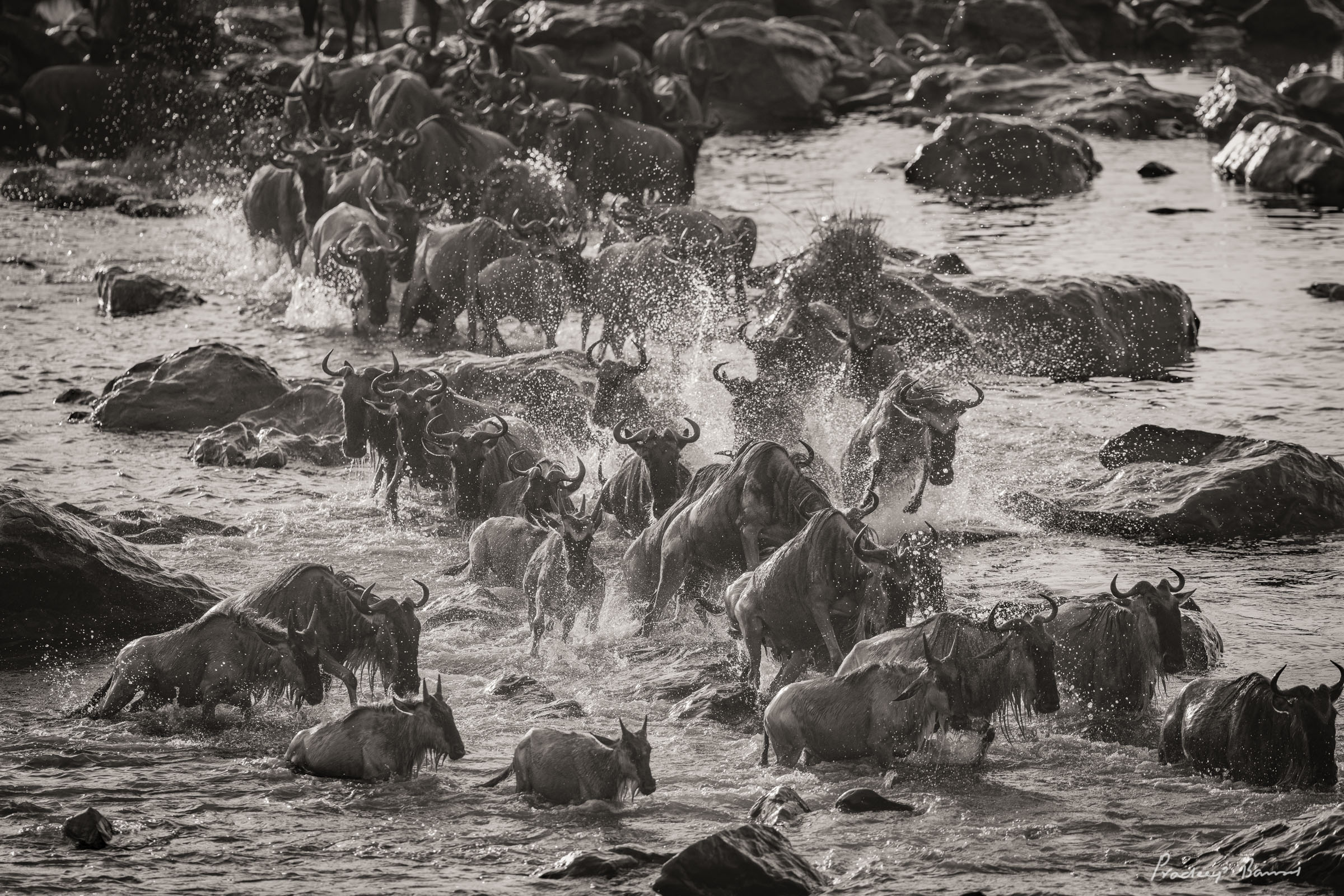
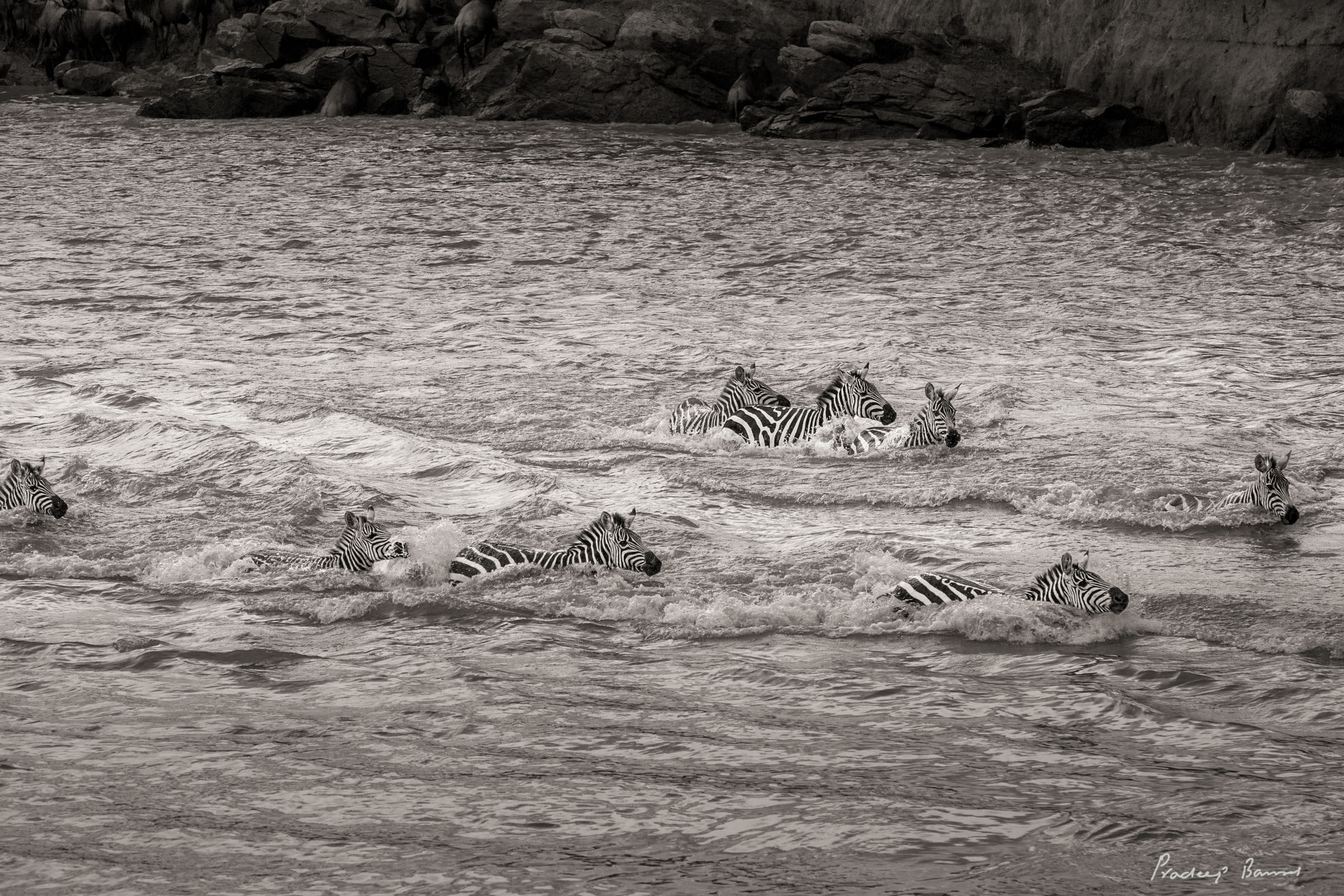
Within seconds, thousands of wildebeest surge after it. Zebras follow closely behind, with antelope joining the stampede.
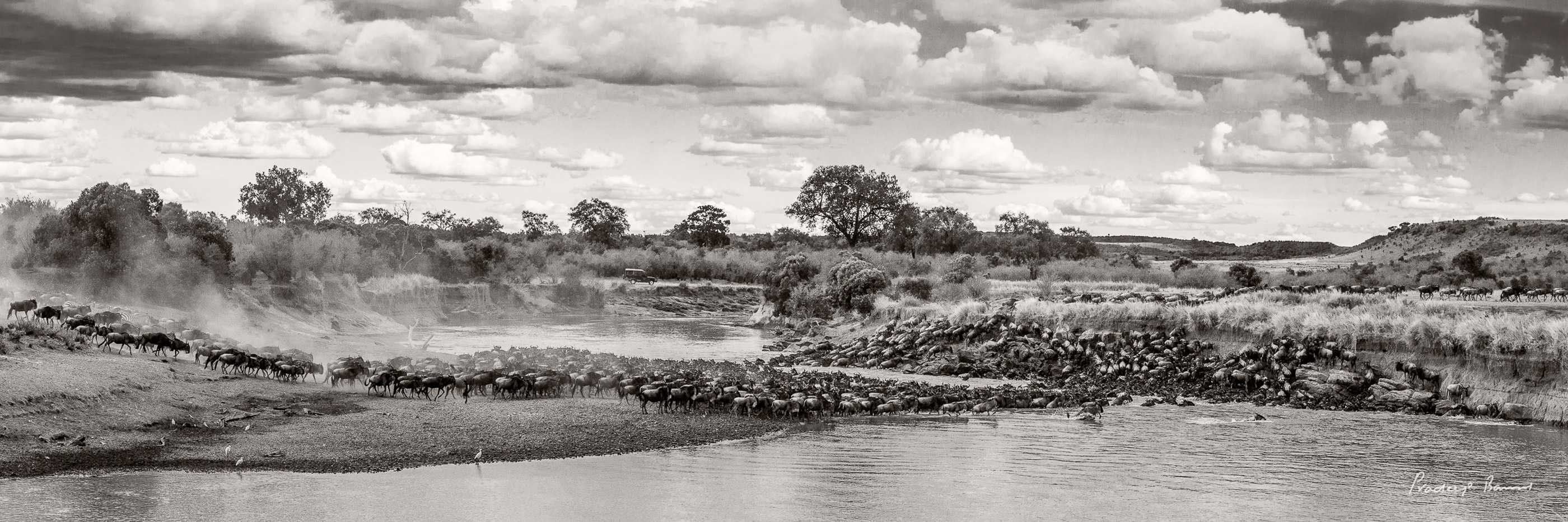
The ultimate struggle for survival: Thousands of wildebeest and zebras brave the crocodile-infested waters of the Mara river during the Great Migration
What moments earlier had been complete hesitation becomes absolute commitment.
The Gauntlet of Death
The river crossing is one of the most dramatic events in the natural world.
The steep riverbanks become crowded as thousands of frightened animals launch themselves into deep, fast-moving water.
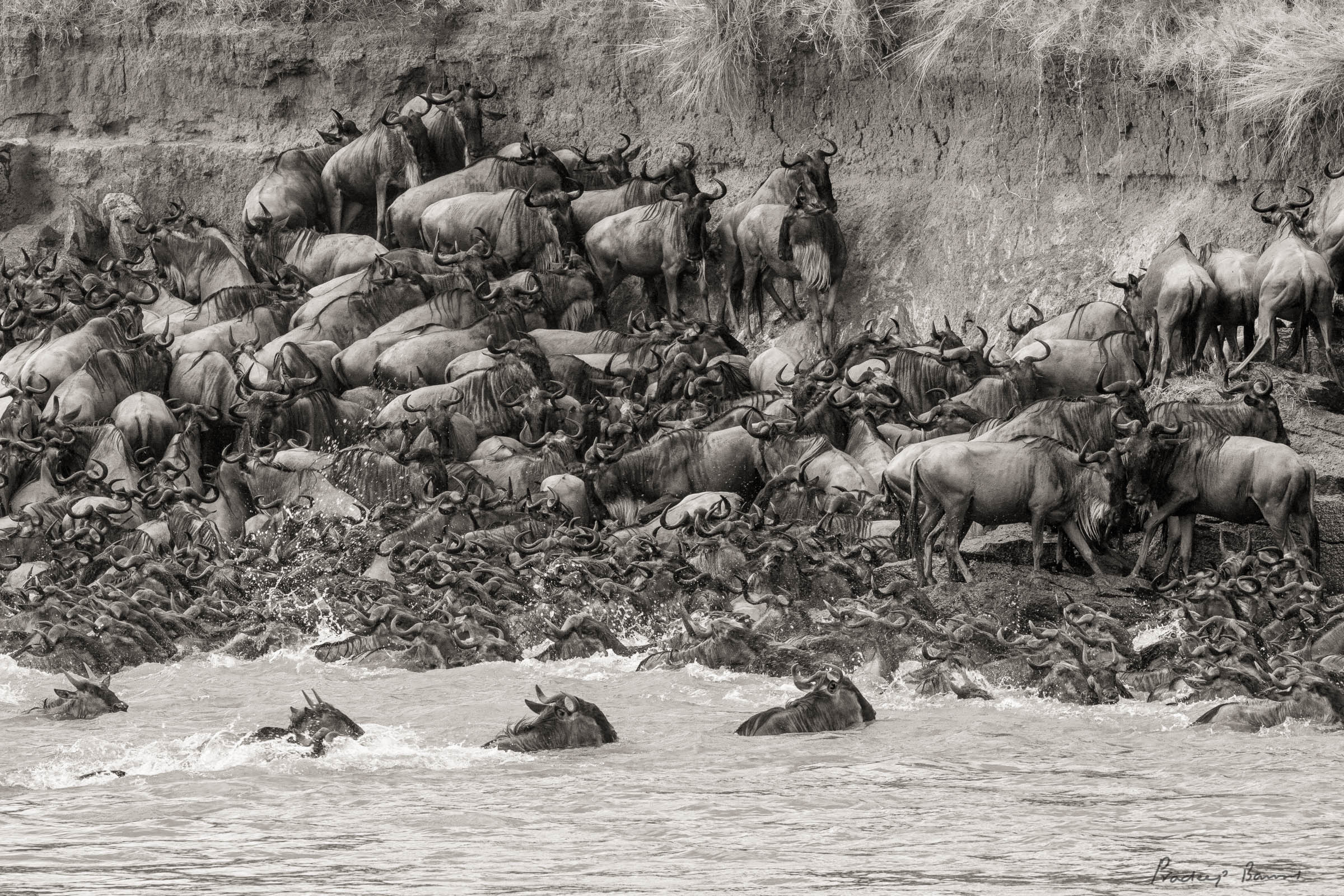
The noise is deafening.
Hooves thunder against the earth.
Water explodes into the air.
Dust mixes with spray.
The river becomes a swirling mass of struggling animals.
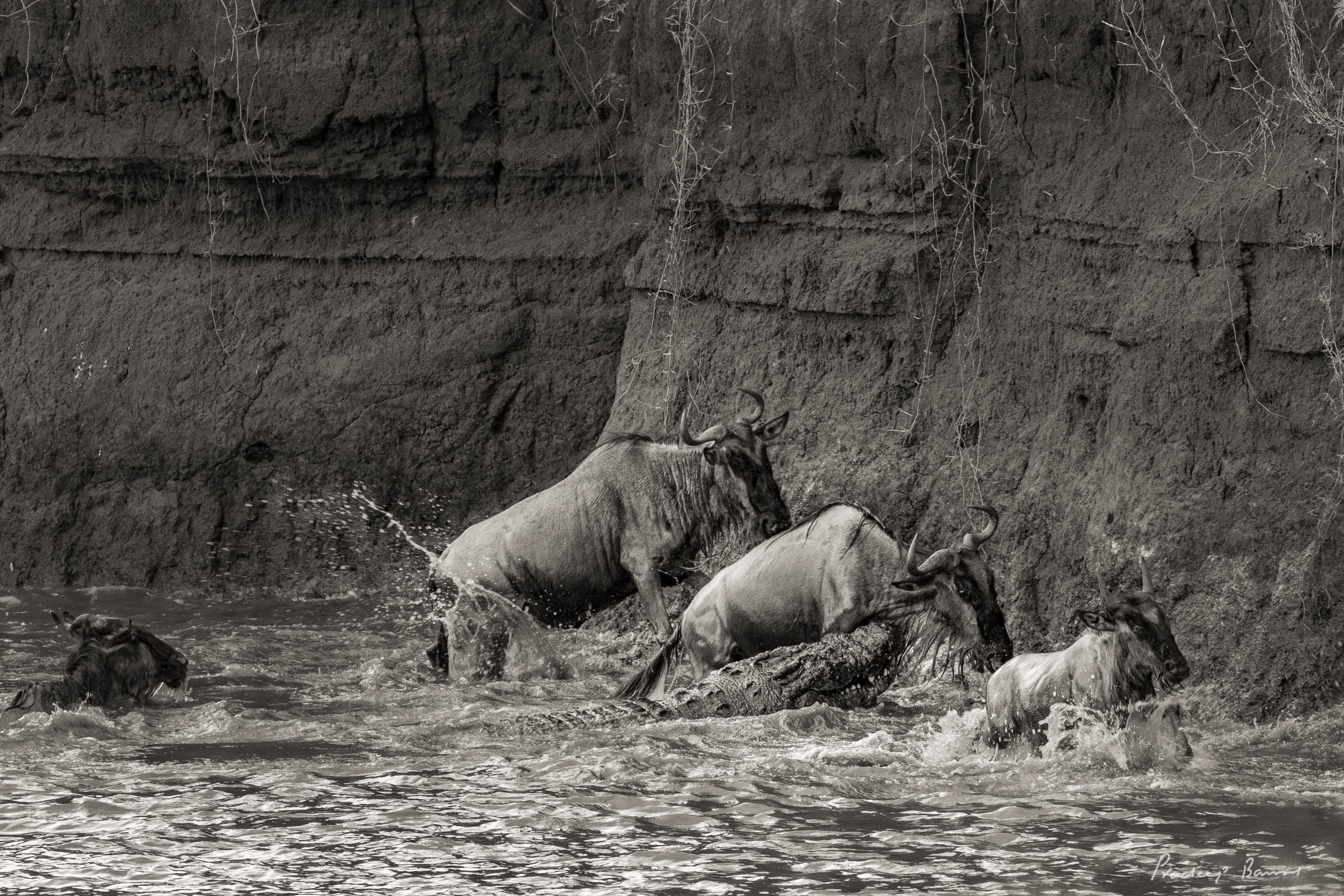
Hidden beneath the surface lie enormous Nile crocodiles.
Some have waited for months without a substantial meal.
These ancient reptiles, some reaching 20 feet in length, suddenly find themselves surrounded by an endless supply of prey. Massive jaws erupt from the water, seizing unlucky wildebeest before dragging them beneath the surface.
But crocodiles are only one danger.
Some animals lose their footing on the muddy banks.
Others are swept away by powerful currents.
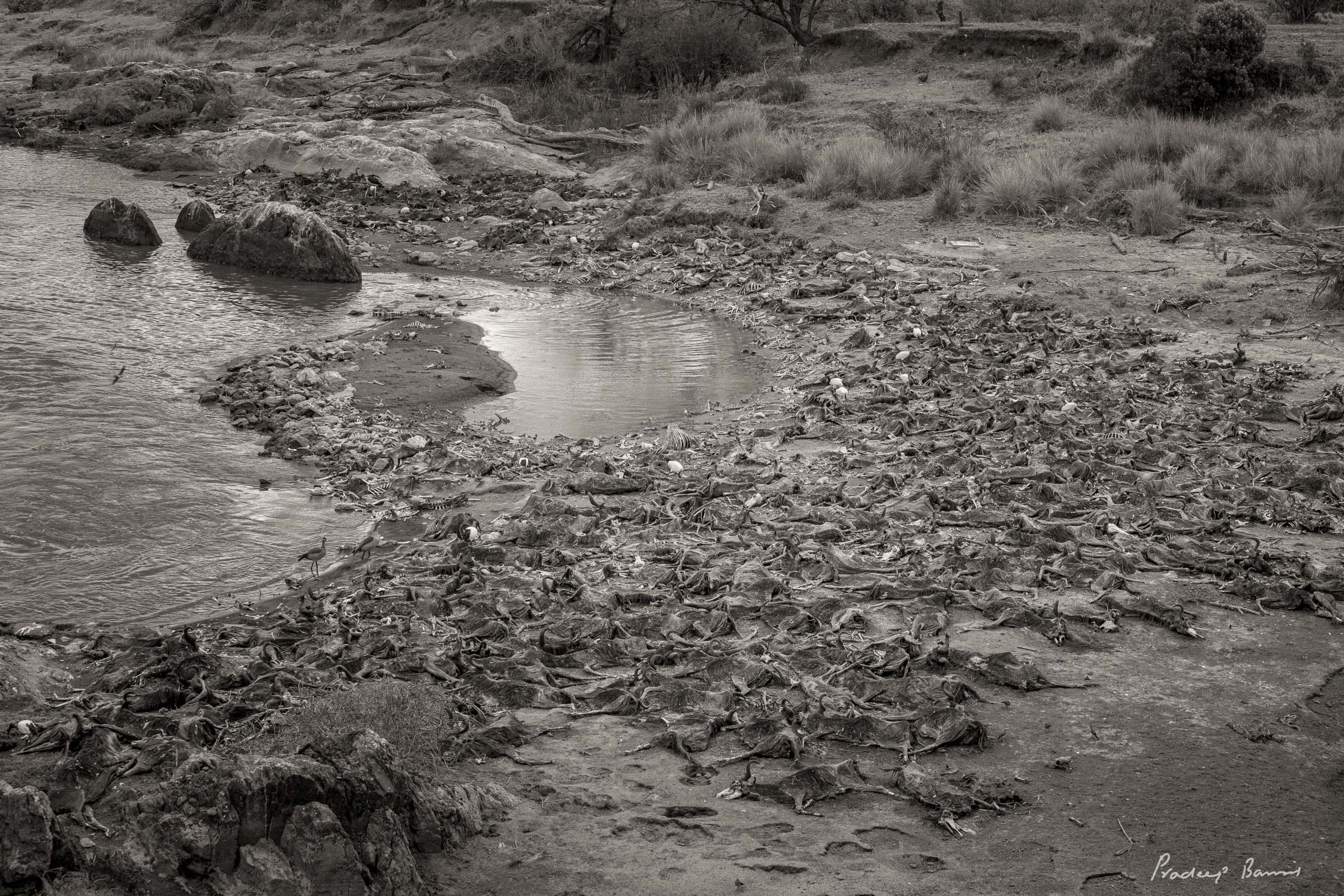
Many drown in the confusion.
Some are crushed beneath thousands of pounding hooves or crippled in the panic.
Those fortunate enough to reach the opposite bank still face another challenge.
Hungry lions often wait nearby, watching the exhausted survivors climb from the water.
For every successful crossing, there are casualties.
It is harsh.
It is emotional.
It is also the very process that has shaped this ecosystem for thousands of years.
The predators depend on the migration just as much as the wildebeest themselves.
A Photographer’s Dream
For wildlife photographers, witnessing a river crossing is the ultimate prize.
Few experiences compare with watching thousands of wildebeest leap into crocodile-filled waters while dust, spray and raw emotion fill the air.
Every crossing is different.
Sometimes it lasts only a few minutes.
Sometimes it continues for hours.
Sometimes it never happens at all.
It is common for a herd to gather at the river’s edge, build tension for hours, then suddenly turn around and walk away.
Photographers may spend several days waiting beside a crossing, only to see the animals change their minds at the last moment.
Success belongs to those who are patient.
And to those who are fortunate.
When everything finally comes together, the reward is unforgettable.
Beauty Beyond the Crossing
Although the river crossings receive most of the attention, they are only one chapter of the migration.
There is extraordinary beauty throughout the journey.
Standing on a rocky kopje and watching more than a hundred thousand wildebeest spread across the plains is an unforgettable sight. The landscape seems alive as animals graze peacefully beneath endless African skies.
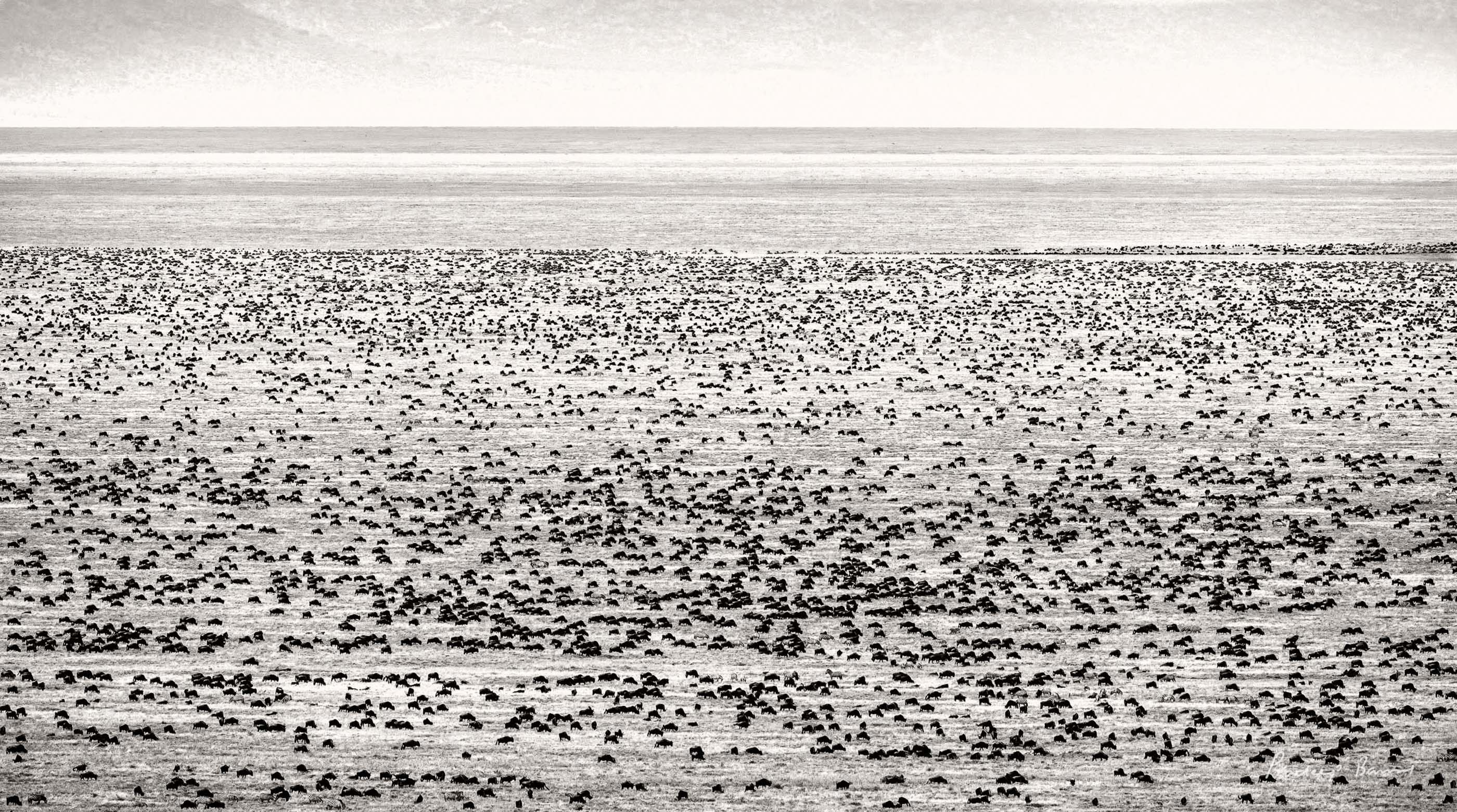
The scale of the Great Migration is mind-boggling; thousands of wildebeest and zebras cover the Serengeti plains as far as the eye can see.
Hours later, the same herd begins to move.
Small groups join together.
The lines become longer.
Soon, thousands of animals are walking in single file toward the horizon.
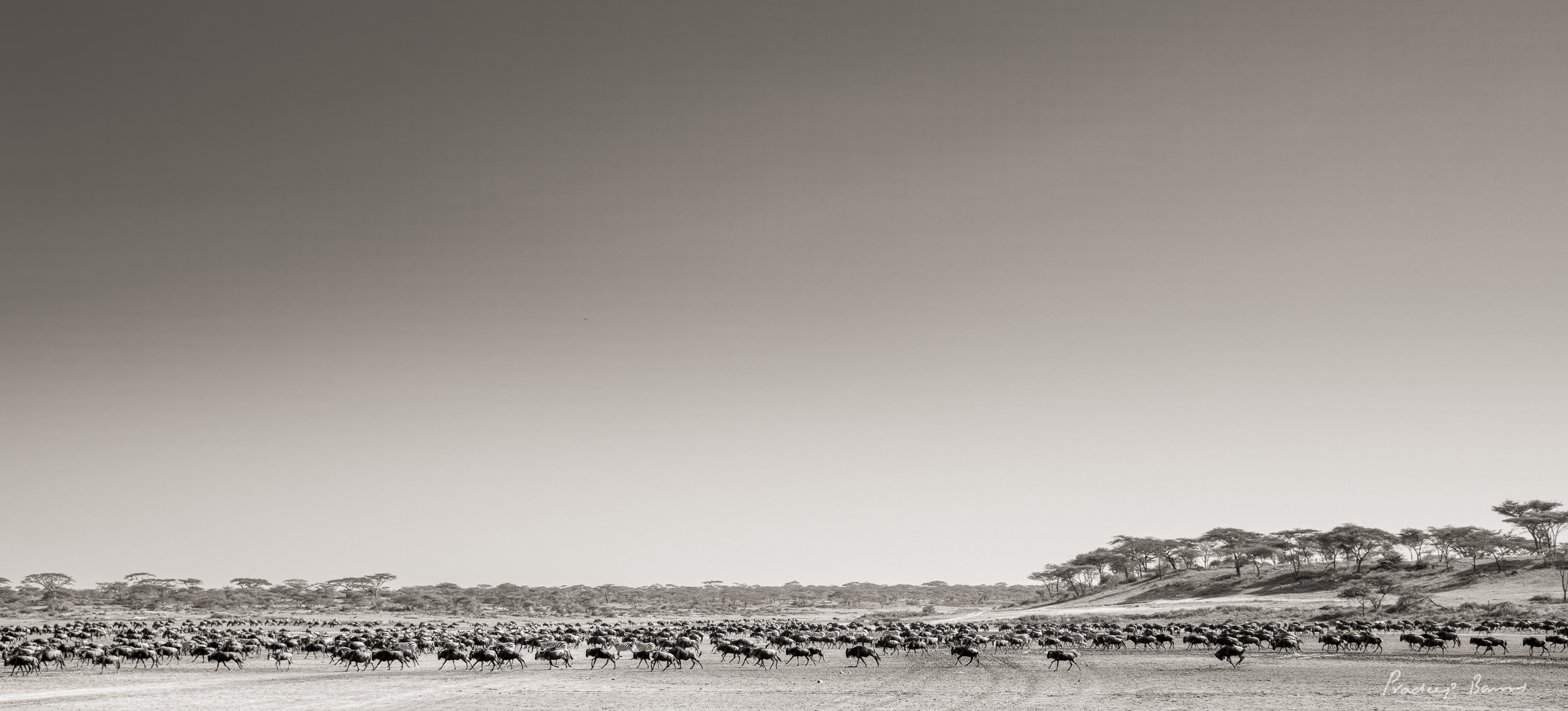
From above, these winding columns resemble giant rivers flowing across the grasslands.
It is peaceful.
Orderly.
Almost hypnotic.
For photographers, these quieter moments are often just as rewarding as the dramatic crossings. Soft morning light, golden evening skies and endless lines of animals stretching into the distance create images that capture not only the scale of the migration but also its timeless rhythm.
A Timeless Wonder
The Great Migration has unfolded across the Serengeti for thousands of years.
Long before roads, fences or national borders existed, these herds followed the rains across East Africa.
Today, they continue the same remarkable journey.
Every birth, every river crossing, every predator, every blade of fresh grass is part of an ecosystem that remains one of the last great natural wonders on Earth.
For wildlife photographers, the migration offers endless opportunities to capture powerful stories of life, survival and resilience.
For safari travellers, it is an experience that leaves a lasting impression long after the dust has settled.
There is simply nothing else like it.
To stand among nearly two million wild animals moving together across the African plains is to witness nature on its grandest scale. It is a reminder that the world still holds places where ancient rhythms continue unchanged, where instinct guides life across hundreds of miles, and where every sunrise brings another chapter in one of Earth’s greatest stories.
The Great Migration is not just Africa’s greatest wildlife event.
It is, without question, Earth’s greatest wildlife spectacle.