
Craig: A Farewell to a Gentle Giant
Remembering Craig, the Supertusker of Amboseli

Craig, the elephant with the largest tusks on Earth says Hello.
On January 3, 2026, in the shadow of Mount Kilimanjaro, Craig the supertusker died of natural causes. He was 53 years old. Word of his passing moved quickly through the small, tight-knit world of Amboseli — the researchers who had watched him grow from a gangly calf into a legend, the guides who built entire safaris around the hope of finding him, and the photographers, myself included, who had spent countless hours waiting in the golden dust for a glimpse of those extraordinary tusks. For all of us, it felt less like hearing news and more like losing a friend.
I want to tell you about Craig's life, because it is a story worth telling — one that stretches back more than half a century, tangled up with the fortunes of an entire species, and one that reminds us why elephants like him are so rare, and so precious.
Born of Royalty
Craig came into the world in 1972, the son of Cassandra, a matriarch so beloved and so recognizable that everyone simply called her "Droopy Ears," a nod to the soft, folded ears that set her apart from the rest of her family. Cassandra led the CB family, one of the many elephant families that call the Amboseli ecosystem home — and one of the many families whose entire lineage has been meticulously documented, generation after generation, by Cynthia Moss and the Amboseli Trust for Elephants.
This is worth pausing on, because it is rare in the natural world. Thanks to decades of patient, dedicated fieldwork, the elephants of Amboseli are not anonymous animals wandering an unknowable landscape. They are individuals with names, personalities, and family trees, going back to the 1970s. We know who Craig's mother was. We know, remarkably, that he may have come into the world alongside a twin sister named Cerise — a genetic event so uncommon among elephants that it borders on the miraculous. Twins are exceedingly rare in a species that typically carries a single calf for nearly two years before giving birth. If Craig and Cerise really were twins, they were rare from the very moment they took their first breaths.
Cerise's story is its own small triumph. She grew up within the CB family and, at the age of 38, rose to become its matriarch — carrying forward the legacy of leadership her mother Cassandra had once held. Craig's path took a different direction, as it does for most young males. Elephant sons leave their natal family as they approach adolescence, striking out to live independently or in loose associations with other males. Most bulls make this departure somewhere between the ages of 12 and 14. Craig lingered a little longer, not leaving the CB family until he was 16 — perhaps a sign, even then, of the unhurried, steady temperament that would define him.
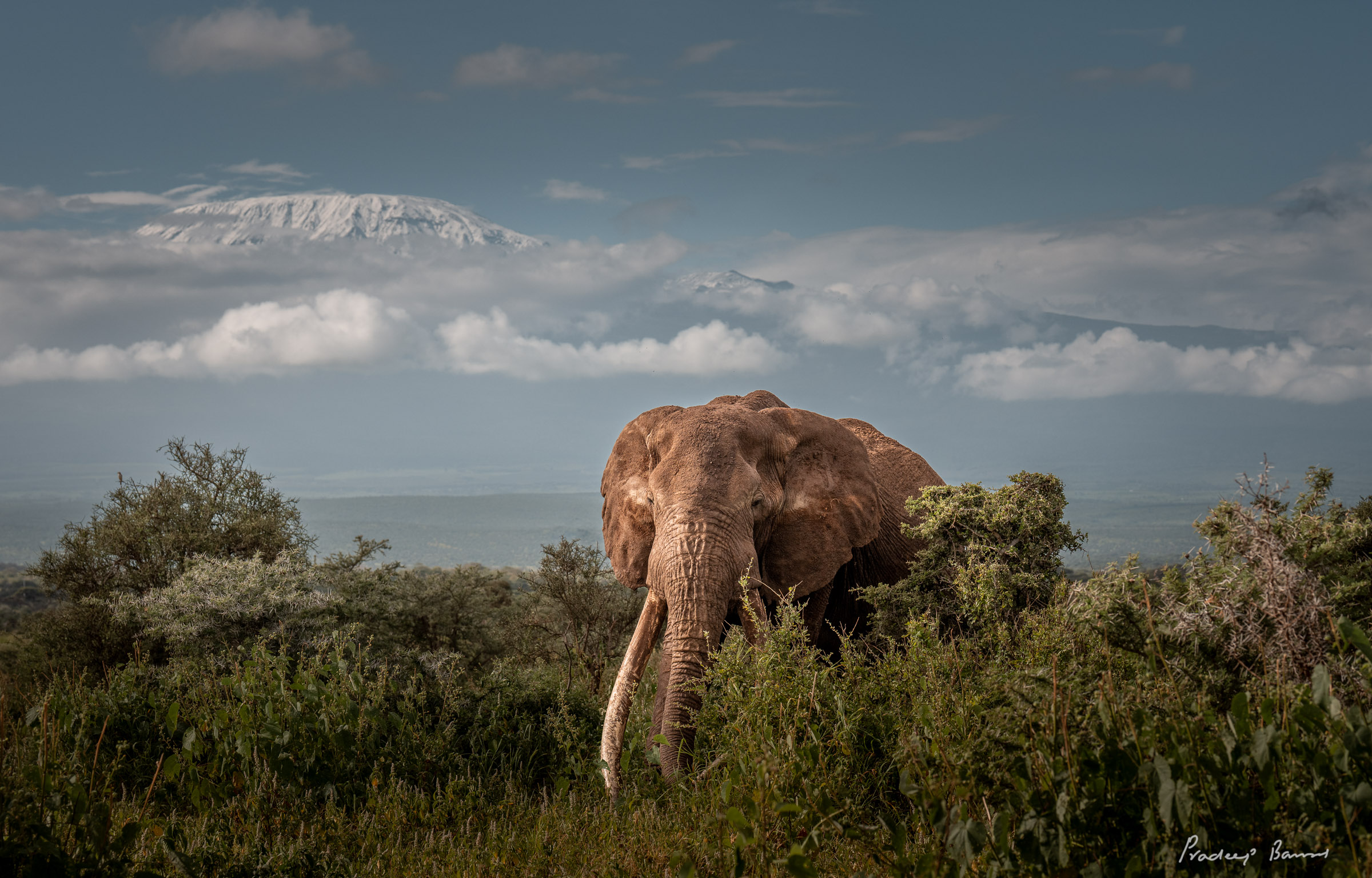
A Supertusker and a Super Mountain - Craig and Kilimanjaro
The Making of a Supertusker
What Craig became after leaving his family is the reason his name is known far beyond the borders of Kenya. He grew into one of the most magnificent bull elephants alive — and very possibly the most photographed elephant on the planet. His tusks were the stuff of legend, each one weighing over 100 pounds, curving forward and down with a weight and symmetry that seemed almost impossible on a living animal. It was this pair of tusks that earned him the title "supertusker," a designation reserved for elephants whose tusks weigh at least 100 pounds apiece.
To understand how extraordinary this makes Craig, consider this: today, there are only ten supertuskers left in the entire Amboseli ecosystem. Ten. There are a handful of younger males who show the genetic promise to grow into supertuskers themselves one day, but they are still too young, their tusks still growing toward whatever destiny awaits them. For now, Craig was one of an irreplaceable handful — a living relic of a time when elephants like him were less exceptional, when tusks like his were not the rarity they are today.
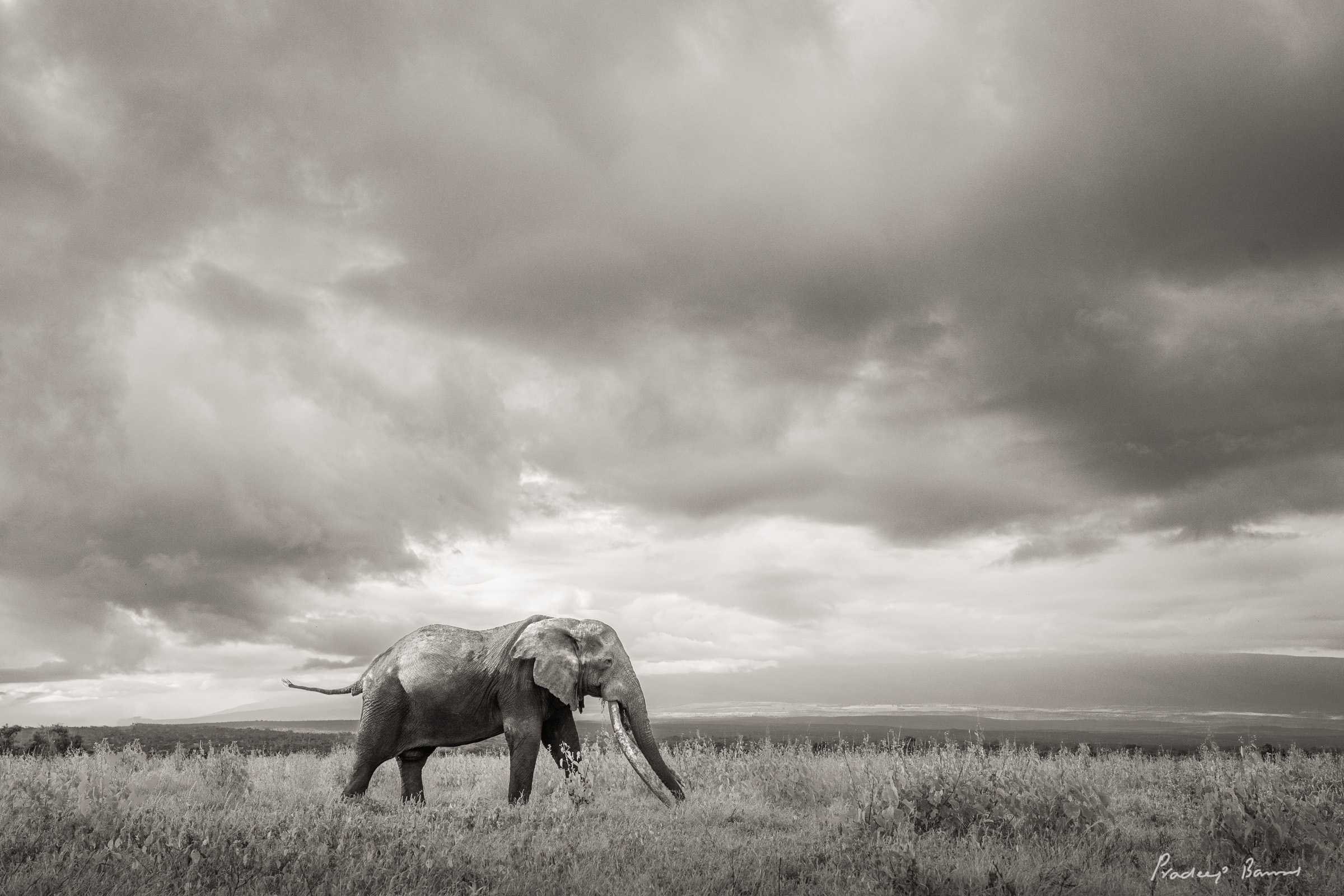
A majestic elephant under a dramatic sky
Photographers understand instinctively what makes an animal like Craig so captivating. It isn't just size, though he had that in abundance. It is presence. Craig moved through the landscape with an unhurried, dignified calm, utterly unbothered by the vehicles and camera lenses that gathered whenever word got out that he'd been spotted. Guides would radio each other in hushed, excited voices. Tourists would fall silent, cameras raised, as this enormous, ancient-looking creature ambled past acacia trees that seemed to shrink beside him. There was something almost otherworldly about seeing tusks that heavy, that long, still attached to a living, breathing animal, still swaying gently as he walked.
And yet, for all his size and fame, everyone who encountered Craig came away with the same impression: he was gentle. Enormous, yes. Imposing, undeniably. But gentle. He carried his power lightly. He was patient with vehicles that idled too close, calm around the crowds his presence inevitably drew, unhurried in a world that, for elephants, has become increasingly dangerous and unforgiving.
A Species Under Siege
Craig's rarity is not simply a matter of individual genetics — it is a symptom of a much larger tragedy. Before the mid-to-late 19th century, before European guns arrived on the African continent in large numbers, it's estimated that Africa may have been home to as many as ten million elephants. Ten million. Today, fewer than five hundred thousand remain, and many of those survive under threatened, precarious conditions.

Textured skin and eye of a bull elephant with the layers of mud caked on to protect against insects
Kenya banned sport hunting in 1977, five years after Craig was born, which should have marked a turning point. In many ways, it did. But poaching for ivory, the steady erosion of habitat as human populations and development expand, and escalating conflict between people and wildlife have continued to grind away at elephant populations across the continent. Big tuskers like Craig — precisely because of the magnificent ivory they carry — have long been prime targets for poachers, making individuals like him not just biologically rare, but genuinely endangered as living beings, protected as much by vigilance and monitoring as by any law on paper.
This is why organizations like the Amboseli Trust for Elephants matter so enormously. Their decades of continuous observation don't just satisfy scientific curiosity — they provide the knowledge and, in many cases, the protective attention that helps keep elephants like Craig alive far longer than they might otherwise survive. Every family tree recorded, every birth and death documented, every individual named and tracked, is part of a larger effort to understand and protect a species that we came astonishingly close to losing altogether, and one whose future remains far from secure.
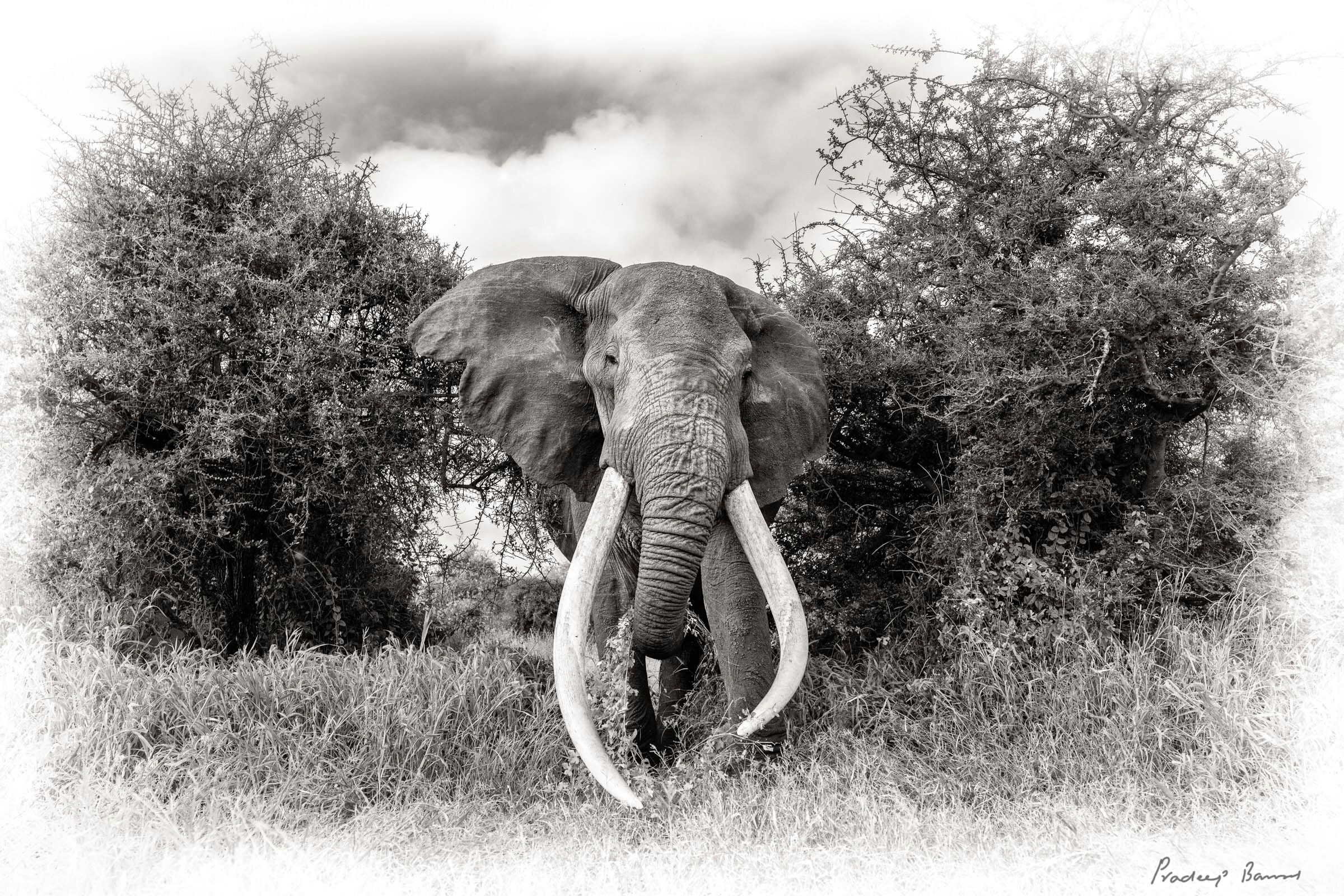
Craig lived to 53. In the wild, that is a full and fortunate life for a bull elephant, especially one carrying tusks as valuable, and as dangerous to possess, as his. That he died of natural causes, peacefully, on his own terms, is something to be quietly grateful for. So many supertuskers before him were not so fortunate.
Remembering Craig
I never grew tired of photographing Craig. There was always something new to notice — the particular angle of afternoon light catching the curve of his tusks, the way dust rose around his feet as he moved through tall grass, the calm, deliberate way he'd lower his head to drink at a waterhole while a dozen camera shutters clicked around him. He had a kind of quiet majesty that never fully translated into any single photograph, no matter how many times I tried.
What I will remember most, though, isn't the tusks, remarkable as they were. It's the gentleness. For an animal so large, so famous, so relentlessly photographed, Craig carried himself with a calm that put everyone around him at ease — elephants, guides, tourists, photographers alike. He was proof that size and power don't have to come with aggression, that a creature capable of such physical dominance can move through the world with patience and grace.
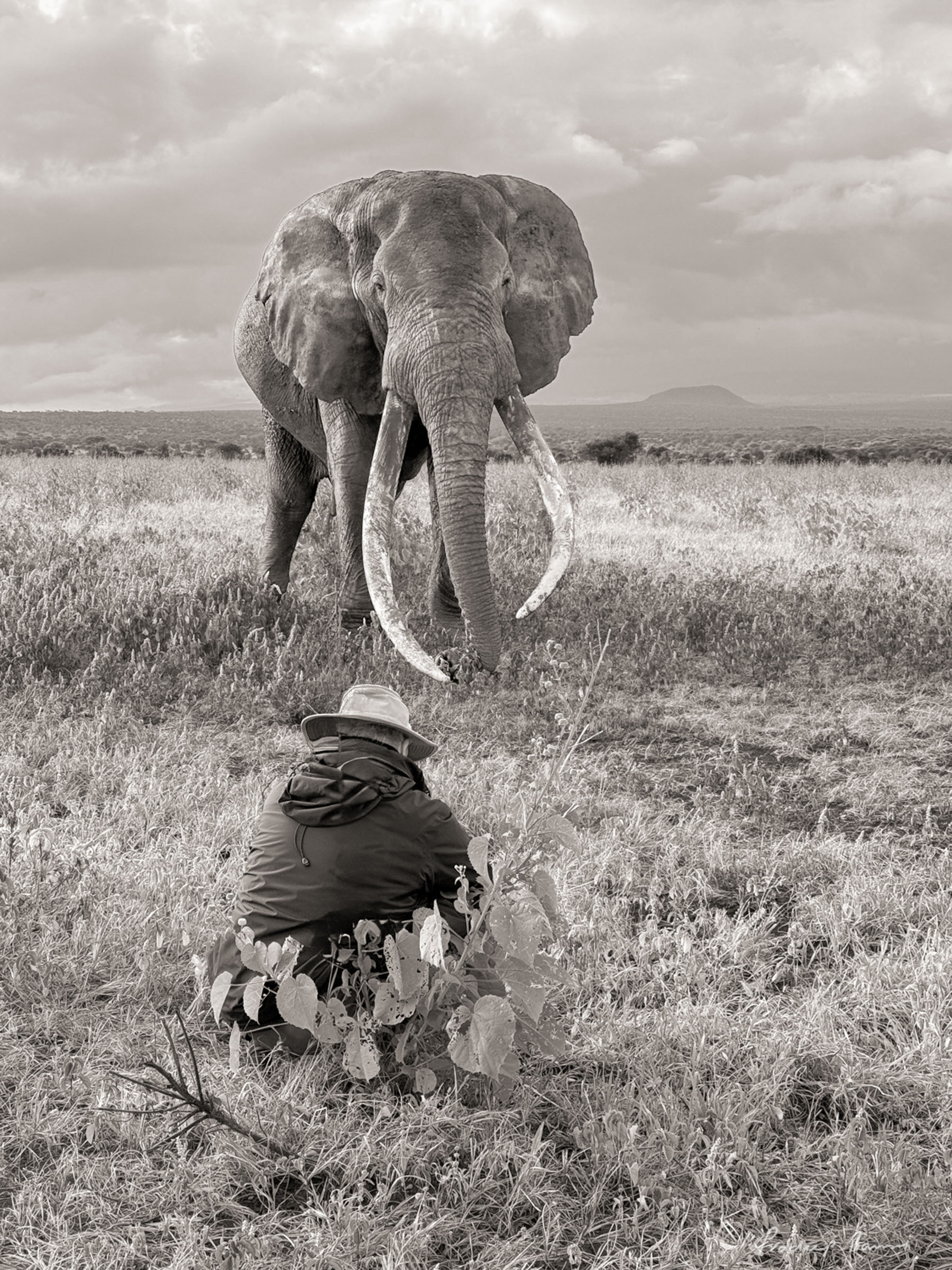
Craig approaching within touching distance, as I waited spellbound
Craig is gone now, but he leaves behind more than memories and photographs. He leaves behind a lineage stretching back to Cassandra and forward through Cerise, a documented history spanning over fifty years, and a reminder of what Amboseli's elephants once were, and what a precious few of them still are. Rest well, Craig. The plains of Amboseli, and all of us lucky enough to have witnessed you walking across them, are better for having known you.
May your soul find sadgati.